Where Does Fluorinated Ethylene Propylene Tubing Perform Best?
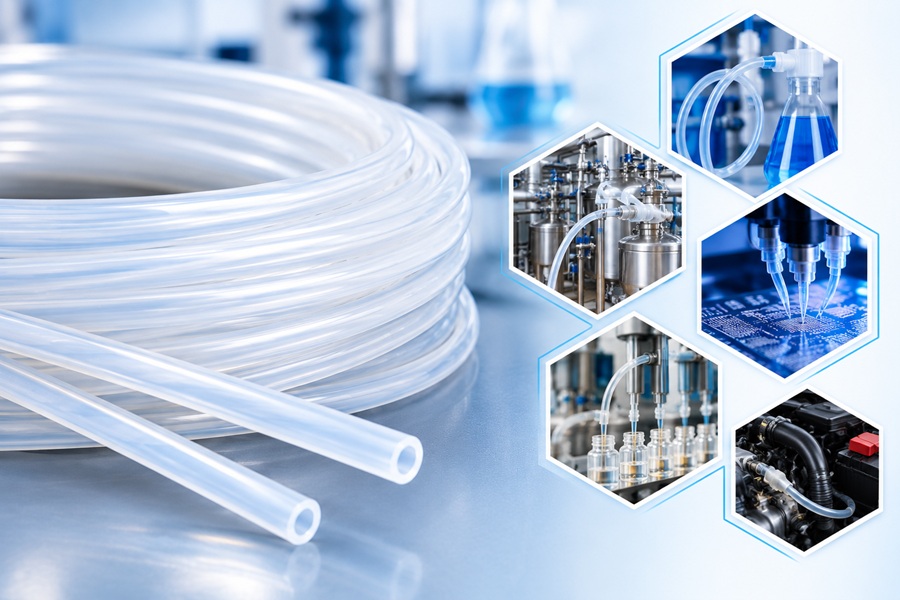
If you have ever wondered where fluorinated ethylene propylene tubing actually earns its keep, the short answer is anywhere heat, chemicals, or tight tolerances are part of the job. At The Engineering Resource Group, we build the machines that produce this material every day, and we see firsthand which industries lean on it hardest and why. This blog walks through the settings where FEP tubing shines, what makes it different from other shrink materials, and why the way it is manufactured changes how well it performs once it is out in the field.
Medical Devices and Diagnostic Equipment
Hospitals and device makers reach for FEP tubing because it stays clean under pressure, both literally and chemically. Catheters, guidewires, and diagnostic instruments need a material that will not react with bodily fluids or sterilization chemicals, and FEP handles that without complaint. Its low friction surface also helps devices slide smoothly through narrow pathways, which matters a great deal during procedures where precision is everything.
Manufacturers in this space also care about consistency from batch to batch. A tube that shrinks unevenly or leaves a pinhole can ruin an entire production run, so quality control at the expansion stage is not optional. That is part of why our expansion machines pair with automated inspection, catching defects before they ever reach a client's assembly line.
Electrical Insulation and Wire Protection
Electricians and equipment builders use FEP tubing to insulate wires that will face heat, moisture, or corrosive environments. Aircraft wiring harnesses, industrial control panels, and outdoor electrical assemblies all benefit from tubing that resists degradation over years of use. Standard PVC or polyolefin shrink tubing simply cannot match FEP's resistance to extreme temperatures, which is why engineers specify it for applications where failure is not an option.
Cost plays a role too, but not the way people expect. FEP tubing costs more upfront than cheaper alternatives, yet it lasts longer and needs fewer replacements. Over the life of a project, that math tends to favor FEP every time.
What Makes FEP Different From Other Heat Shrink Materials?
People often ask us this directly, so it is worth answering plainly. FEP has a higher melting point than most shrink tubing options, and it holds up better against solvents, acids, and fuels. It also has excellent optical clarity, so technicians can visually inspect what is happening inside a tube without cutting it open. Few other materials on the market combine chemical resistance, heat tolerance, and transparency in one product.
Fluorinated ethylene propylene tubing also shrinks at a lower temperature than some alternatives, which reduces stress on delicate components underneath. Engineers working with sensitive wiring or fragile substrates appreciate that gentler shrink process, since it lowers the risk of damage during installation.
Aerospace and Fluid Handling Systems
Aerospace teams choose FEP tubing for fuel lines, hydraulic systems, and wiring insulation because weight and reliability both matter in that field. A single failed component at altitude carries consequences far beyond a ground-based system, so specifications tend to be strict and unforgiving. FEP tubing meets those standards because it resists cracking under vibration and holds its shape across a wide temperature range.
Chemical processing plants rely on similar properties, using FEP-lined tubing to move corrosive fluids without contamination risk. Food and pharmaceutical production lines use it for the same reason, since the material will not leach chemicals into whatever passes through it.
Why Does Where Tubing Is Made Make a Difference?
Production quality depends heavily on the equipment behind it, not just the raw material itself. A poorly calibrated expansion machine can introduce inconsistencies that show up months later as field failures. We built our systems around a linear cut-to-length process precisely because manual cutting introduces variation that is hard to catch until it is too late.
Local sourcing also affects lead times and quality communication. Clients looking for heat shrink tubing in Galway, Ireland, often want a supplier who can walk through specifications directly rather than working through several layers of distributors. Shorter supply chains tend to mean fewer surprises.
How Automated Quality Control Changes the Outcome
Every expansion run carries some risk of pinholes or blowouts, especially at scale. Older manufacturing methods relied on operators catching these defects by eye, which works until fatigue or distraction sets in. Our LCTL cutter separates parts automatically based on quality readings taken directly from the expander, so defective sections get flagged and removed before they reach packaging.
That kind of automated recovery matters most on large production runs, where a single missed defect can multiply into thousands of unusable feet. Clients sourcing heat shrink tubing in Galway, Ireland, or anywhere else benefit from that consistency, since it means fewer rejected shipments and fewer delays.
Frequently Asked Questions
Is FEP tubing safe for medical applications?
Yes. FEP is biocompatible and widely used in catheters, guidewires, and diagnostic tools. It resists chemical reactions with bodily fluids and holds up under sterilization processes. Its smooth surface also reduces friction during insertion, which makes it a common choice for devices requiring precision and patient safety.
How does FEP tubing compare to PTFE?
FEP and PTFE share many properties, but FEP shrinks under heat while PTFE does not. FEP also offers better clarity and easier processing during manufacturing. PTFE handles slightly higher temperatures, but for shrink-fit applications, FEP is generally the more practical and cost-effective option.
What industries use fluorinated ethylene propylene tubing most?
Medical device manufacturing, aerospace, electrical insulation, and chemical processing rely on FEP tubing regularly. Each industry values different properties, from biocompatibility to chemical resistance to heat tolerance. Its versatility across these fields is part of why demand for quality FEP tubing continues to grow steadily.
Can defects during production be avoided entirely?
Not entirely, but they can be caught early. Automated systems that monitor expansion in real time identify pinholes and blowouts before tubing reaches final packaging. That reduces waste and improves consistency across large runs, which is a meaningful advantage over manual inspection methods still used by some manufacturers.
Ready to Talk Tubing?
Good tubing starts with good equipment, and that has been our focus from day one. We design systems that make FEP tubing production more consistent, more automated, and less prone to costly errors.
If your team is evaluating suppliers for fluorinated ethylene propylene tubing or exploring options for heat shrink tubing in Galway, Ireland, reach out to The Engineering Resource Group. We are glad to walk through specifications, answer technical questions, and figure out what setup makes sense for your production needs.