What Happens When Medical Tubing Falls Outside Quality Requirements?
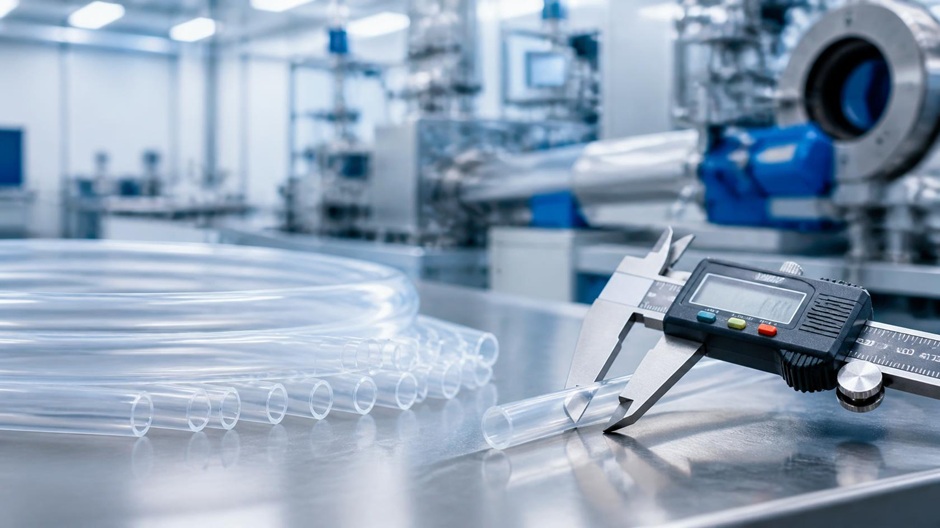
Medical tubing that fails to meet strict quality standards can put patients at real risk and create serious problems for device makers. In this post we walk through the practical consequences of out-of-spec tubing, why those failures matter, and how careful process control prevents them. At The Engineering Resource Group, we design and build the expansion machines and supporting systems that help manufacturers produce consistent FEP shrink tubing, so we see these issues from the production floor outward.
When tubing leaves the production line with dimensions, wall thickness, or material properties outside the allowed range, the trouble starts quickly. A catheter or other device built with that tubing may not fit as designed, may kink under normal use, or may release particles. In the worst cases the device fails during a procedure. Regulatory bodies treat these events as serious quality system failures, and the fallout can include product recalls, warning letters, and lost market access.
How Do Dimensional Errors Show Up in Finished Devices?
Most medical tubing specifications set tight limits on inner diameter, outer diameter, and wall thickness. If a tube expands unevenly or is cut to the wrong length, the finished component will not assemble correctly. A sheath that is too large may leak. One that is too small can restrict fluid flow or damage the instrument it is meant to protect. Surgeons notice these problems in the operating room, and the manufacturer must then investigate every lot that left the plant.
Heat-shrink versions add another layer of risk. Medical heat shrink tubing is designed to recover to a precise final size when heated. If the expanded tube starts outside the recovery window, the recovered diameter will also be wrong. That single defect can scrap an entire batch of catheters or require expensive rework.
What Happens to Patient Safety When Material Properties Drift?
Beyond size, the material itself must stay within specification. FEP used in medical applications needs consistent clarity, low extractables, and reliable tensile strength. When melt temperature, draw ratio, or cooling rate drifts, the tubing can become brittle or develop surface imperfections. Brittle tubing cracks during insertion. Surface flaws can harbor bacteria or shed particles into the bloodstream. Either outcome raises the chance of infection or embolism.
We have watched customers discover these problems only after devices reached clinical use. The investigation that follows is costly and time-consuming. Every lot must be traced, and any remaining inventory is usually quarantined until the root cause is proven fixed.
Why Process Control Matters More Than Inspection Alone
Inspection can catch many defects, yet it cannot catch every one. Statistical sampling always leaves a residual risk. The better approach is to keep the process inside its control limits so that almost every tube produced meets specification. That requires stable expansion, accurate temperature control, and precise length cutting.
Our expansion systems are built around closed-loop control of temperature, pressure, and speed. The Linear Cut To Length unit, offered both as a fully integrated part of the expansion line and as a stand-alone system, is patent-protected. It cuts each tube to the programmed length without introducing secondary handling damage that can create nicks or ovality. When the expansion and cutting steps stay consistent, the finished medical-grade shrink tubing stays inside the tight windows that device makers demand.
What Does Recovery Look Like After a Quality Escape?
Once a quality escape is discovered, the first task is containment. All suspect material is isolated. Then a root-cause investigation begins. Common causes include worn tooling, drifting temperature controllers, or operator error in setup. Corrective actions may involve recalibrating sensors, replacing seals, or rewriting work instructions. Effectiveness checks confirm that the process is again capable. Only then can production resume with confidence.
The longer the investigation takes, the greater the disruption. Companies that maintain good process data recover faster because they can point to exact process parameters at the time the defective tubing was made. Those that lack detailed records spend weeks testing hypotheses.
Can Secondary Operations Hide Earlier Problems?
Sometimes tubing leaves the expansion line looking acceptable, yet problems appear later during secondary processing. Reflow, bonding, or sterilization can reveal weaknesses that inspection missed. A tube that was slightly over-expanded may recover correctly at first but then show residual stress that causes cracking after ethylene-oxide sterilization. Manufacturers who rely only on final inspection often discover these latent defects too late.
By controlling the expansion and cutting steps tightly, we help customers reduce the chance that latent defects ever enter secondary operations. Stable input material makes every later step more predictable.
Frequently Asked Questions
What is the most common reason medical tubing falls outside specification?
Dimensional variation caused by unstable expansion temperature or pressure is the most frequent cause. When the process drifts even a few degrees or a small pressure change occurs, wall thickness and diameter move outside the allowed range. Consistent closed-loop control of both variables keeps medical-grade shrink tubing inside specification.
How does a patent-protected cut-to-length system help quality?
The Linear Cut To Length system, available integrated or stand-alone, severs each tube cleanly without secondary handling that can introduce nicks or deformation. Clean cuts preserve the dimensional integrity already achieved during expansion and reduce the chance of later rejection.
Can out-of-spec tubing ever be reworked successfully?
In limited cases a slightly oversized tube can be re-expanded or resized, but most medical specifications prohibit rework because it may introduce new stresses or contamination. Rejection and scrap remain the safer and more common path.
Why does material property drift matter as much as size?
Even tubing that measures correctly can fail if tensile strength, elongation, or extractables fall outside limits. Brittle material cracks during insertion; high extractables raise biocompatibility concerns. Both issues can force a recall.
What should a manufacturer do first after discovering a quality escape?
Contain all suspect material, quarantine related lots, and begin a documented root-cause investigation. Quick containment limits exposure while the investigation identifies the true process variable that drifted.
Ready to Strengthen Your Tubing Process?
If you produce or specify FEP medical tubing and want to reduce the chance of quality escapes, we invite you to talk with our team. We can review your current expansion and cutting steps, show how integrated or stand-alone linear cut-to-length systems fit into existing lines, and share practical process data that other manufacturers have used to tighten control. Contact us at The Engineering Resource Group to schedule a technical discussion. We are ready when you are.
When medical tubing drifts outside its quality window, the consequences reach far beyond the production floor. Patients face higher risk, manufacturers face recalls and lost trust, and schedules slip. Tight process control at the expansion and cutting stages remains the most reliable way to keep medical heat shrink tubing inside specification and devices safe. At The Engineering Resource Group, we continue to refine the machines and software that help producers achieve that control every day.